The Northwest Corner will be in extended recess over the Thanksgiving holidays. Drop back during, oh, say, the second week of December, well after the turkey and dressing have been consumed, and the cranberry sauce has been wiped off your faces, and see what we have to offer. Meanwhile, best wishes to you all, and ...
Saturday, November 20, 2010
Thanksgiving recess
Posted by
Rainier96
at
8:43 PM
0
comments
Thursday, November 18, 2010
Confederacy of dunces
The reality of the existence of anti-matter has been known for decades. The ion track of a positron -- the anti-matter counterpart of an electron -- was first observed in 1932. Positron emission tomography (PET) scanners are used routinely in hospitals to observe metabolic processes within the human body.
But because positrons, and other anti-matter particles, interact violently with matter, their existence has been observable only as short tracks, evidencing the infinitesimal length of their life spans from creation to annihilation. This week, the CERN laboratories in Geneva revealed that their scientists had been able to collect 38 anti-atoms of hydrogen -- each anti-atom being an antiproton surrounded by a positron -- and to keep them in existence for a tenth of a second. This period of existence is much longer than that of prior anti-matter observations. Apparently, even a tenth of a second will be long enough for the chemical properties of anti-hydrogen to be studied.
So far as I can tell, this development is more of an engineering feat -- keeping the anti-matter away from the "matter" walls of its container, using electromagnetic fields and temperatures of 0.5 degrees K. -- than any advance in theoretical understanding. Nevertheless, it's an impressive accomplishment, and scientists hope that it will enable significant advances in our understanding of anti-matter.
What impresses me enough to mention this accomplishment here, however, is not the accomplishment itself, but the on-line reaction from readers. The reaction has been about 90 percent negative, almost violently negative. The negative reactions can be fit into any one of several categories, although many comments cross category lines.
1. This research is just another waste of money. What's in it for me?
2. Only an atheist would be interested in this stuff. Trust in God. Not in these so-called scientists who are trying to play God themselves. Remember the Tower of Babel?
3. This is the first step in building an anti-matter bomb that will destroy civilization.
4. Scientists lie, and so do journalists. There's probably no such thing as anti-matter. Don't believe all the crap you read; I sure don't.
There is also a large category of responses -- I'm disregarding them -- that somehow attempt to use this scientific news as the basis for either anti-Obama or anti-Republican rants, as well as the occasional anti-Switzerland diatribe.
This country desperately needs a revival of interest in pure scientific research -- increased numbers of students majoring in the sciences, more accessible scientific writing for non-scientists, and better scientific journalism to keep the general public aware of how their world is changing scientifically. We need, as a nation, an increased appreciation of the obvious fact that pure scientific research can ultimately result in discoveries that benefit our lives. We also need somehow to inculcate in our citizens -- especially the young people who are still flexible in their thinking and open to new ideas -- an appreciation of pure science, apart from any potential applications to which it may lead, as a valuable and exciting means of understanding the universe and our place in it.
Surely, a generation that so much loves fantasy and wizardry can be shown the excitement of scientific discovery as the door to real-life magic. Once again, we lack only the teachers with the necessary enthusiasm and background, and the ability to bring that enthusiasm and scientific background to children in ways they can understand and appreciate.
Not that many years ago, science, math and engineering were favored majors for bright kids starting college. That excitement was reflected in attitudes shared by the entire society. The Seattle World Fair in 1962 -- Century 21 -- was dedicated to future scientific achievement, and the United States Science Pavilion was the most impressive, and probably popular, attraction of the fair.
Our universities, still the best in the world, are filled each year with increasingly large percentages of foreign students, studying math and science, as American students show decreasing interest in those subjects. But countries like China and India are developing universities of their own, with a quantity and quality of students studying in scientific fields that may eventually surpass our own. Soon, they won't really need our universities. Meanwhile, in this country, we are losing not only our excitement about the world of the future, but our ability to compete economically with other nations.
Somehow -- for both our economic and our psychological welfare -- we need to regain our former enthusiam for scientific studies, our craving to learn more about the nature of our physical world, where it's come from, and how it works.
And we certainly have to be alarmed at the popular scientific illiteracy, and the contempt for scientific education and research, that have been all too amply illustrated by the responses shown today to the news from CERN.
Posted by
Rainier96
at
1:55 PM
2
comments
Monday, November 15, 2010
Guilt in the wilderness
It was in 1850 that Nathanial Hawthorne wrote The Scarlet Letter, his fictional reconstruction of certain events two centuries earlier in a primitive Boston that was then little more than a village. He based his novel, or "romance" as he called it, on a mysterious letter "A" made of cloth and a bunch of old papers and documents, all of which he uncovered in the Salem Custom House where he was employed, unhappily, as Surveyer of the Revenue.
The Scarlet Letter is the sort of book you read in school, and, in fact, I last read it when I was a college sophomore. But this past week, I saw Intiman Theatre's dramatization of the story, and was both enticed and puzzled into re-reading the book. Enticed, because the play nicely evoked with spare staging the atmosphere of Puritan Massachusetts, and recalled to mind the mysterious spiritual and psychological world inhabited by its inhabitants. Puzzled, because the climactic scene in Intiman's play was the Rev. Dimmesdale's dying speech from the same scaffold where Hester had received her "A" seven years earlier, a speech in which he essentially told his Puritan audience that nothing but love matters, that only love survives death, and that the moral rules they found so important to their lives were nothing more than meaningless and hurtful man-made restraints on love, rules that would die with the flesh.
To paraphrase, as I recall Dimmesdale's speech from the play, love between two human beings is always good; no one should ever tell another person who to love or not love. Really? This theme sounds shiny, modern and contemporary, but it doesn't sound like a speech that would come from the mouth of a clergyman who was overwhelmed with a sense of guilt -- or from anyone else, for that matter -- in the Boston of the 1640's. And more to the point, I suppose, it doesn't even sound like something a well-received author would have written in the America of 1850 -- not even Hawthorne, who often surprises one with his modern "feel," and with his fascination for human psychology and historical romanticism.
So I sat down and re-read The Scarlet Letter. And I liked it very much! The Scarlet Letter, like so many "classics," is really too good a book to waste on college kids who are frantically trying to absorb information to regurgitate back on examinations. The book's sense of the Puritan world as a very alien society, but one populated by human types common to every era, is there, just as I recalled. Also conveyed are: The feel of a society whose primary goal, at least nominally, is the salvation of souls rather than business and entertainment. Life in a small theocratic town (representing Christian civilization) surrounded by a vast primeval forest (representing heathenism, witches, and the Devil and his worshippers). The daily preoccupation with sin, guilt, repentance, forgiveness. One's daily closeness to heaven and hell.
What I didn't find was a sense by anyone -- including Hester Prynne (the wearer of the scarlet letter) or her guilty, one-time lover, Rev. Dimmesdale -- that sin is merely an illusion, that actions don't have consequences, or that love necessarily conquers all.
Rev. Dimmesdale gives his final speech on the scaffold, all right, confessing his long-secret liaison with Hester -- just as as he does in the play. But in the book, the speech did not represent a joyful shout of triumph over conventional morality, but a hard-won defeat of Hester's betrayed husband, a veritable fiend who had sought to secure Dimmesdale's ultimate damnation as his cruel revenge, and -- more critically -- Dimmesdale's healing end to his seven years of hypocrisy and his fearful hope for -- but hardly certainty of -- final salvation.
His speech ended, Dimmesdale gives his final farewell to Hester and their little daughter. And he then dies, his soul perhaps saved but his body consumed by his years of concealed guilt, leaving his survivors to make their way in life as best they can.
The Scarlet Letter may not immediately appeal to our modern tastes. Lots of talk about Satan, perhaps, but no romantically inclined vampires or werewolves. But it's an absorbing read, a good story, and a dramatic picture of the Puritan society that contributed to the birth of our present civilization.
Posted by
Rainier96
at
4:15 PM
0
comments
Saturday, November 13, 2010
A kid for all seasons
Like brilliant stars shining out of the darkness and gloom of today's world, the best and brightest of today's kids offer assurance that we haven't yet, after all, toppled into a new Dark Age.
For example, college football has become an embarrassing mess, the current problems in the SEC being just the most publicized of the problems. But today's New York Times carries a story about a college player -- Stanford's Owen Marecic -- who turns all the stereotypes upside down. An outstanding fullback and linebacker on Stanford's sixth-ranked team, he is one of the few players in recent years to play both offense and defense -- at a time when both offenses and defenses have become devilishly complex. And he does so, not as a P.E. major, but as an articulate and hard-working biology major with an A average. While many football players are out partying between practices, Marecic studies late into the night. He spent the past summer interning at Stanford Hospital.
Reading about Marecic reminds me of another accomplished young man -- 16-year-old Kiril Kulish -- a teenager who answers to what I suspect will be a household name, internationally, in another ten years. Kulish is best known today as one of the three original rotating "Billys" in the Broadway production of Billy Elliot, winning a Tony award for Best Actor in 2009. But he is much more than a Broadway dancer and entertainer.
Kulish's parents immigrated to California from Kiev before he was born, and Kiril grew up in San Diego. He was the youngest dancer ever admitted to the Junior Company of the San Diego Academy of Ballet, from which he successfully auditioned for the role of Billy Elliot. As part of his lengthy preparation for the role, he was given intensive training in tap dance, acrobatics, singing, acting, and pronunciation of the Geordie accent of northeastern England, to supplement his already excellent ballet training. Along with another "original" Billy, David Alvarez, he has been described as one of the world's two best male ballet dancers in his age group.
Kulish is also a concert pianist. He recorded a video of his informal performance of the Chopin Nocturne in B-flat and, more formally, of Chopin's Fantaisie-Impromptu, in 2008, shortly before Billy Elliot opened on Broadway.
After nearly a year on Broadway, Kulish grew too tall, and his voice too deep, for the part of Billy, and he "retired" in October 2009. He returned to school in San Diego, where he performed with the San Diego Academy of Ballet, including a starring role in their 2009 Christmas production of the Nutcracker. He now lives in New York, where he studies at the School of American Ballet.
Besides his exploits in ballet and on Broadway, he has also won the U.S. Ballroom Latin Dance championship, and the World Classical Chopin Award. He is a kick-boxer, karate (national awards each year from 2005-07) and taekwondo fighter, an inline skater and skateboarder, and a competitive water polo player. He plays the guitar, presumably when he finds piano tiresome....
What else? I ran into an interview of Kulish prepared for Russian television -- an informal conversation betwen Kiril Kulish and the Russian interviewer as they wandered around New York, showing off backgrounds of Times Square, Lincoln Center, and other iconic scenery. Kulish easily chatted and joked with his interviewer. All in fluent Russian, of course.
As one awestruck teenager commented, after watching one of Kulish's videos, "Jesus ... I've wasted my life."
Kiril Kulish has already accomplished more in his 16 years than most of us could ever do, even if we were granted multiple lifetimes. Some child prodigies burn brightly in childhood, shining at the one thing on which they've focused their entire lives, only to burn out when they hit their teens. But this kid seems too much at ease in his own skin, too well-grounded by his parental upbringing, and too well-adjusted socially for any such sad ending to be likely.
Kiril Kulish. Keep that name in mind. It's a name I predict you'll come across often in years to come.
Posted by
Rainier96
at
9:10 AM
1 comments
Wednesday, November 10, 2010
Better living through electricity
I've never really understood the concept of an electric blanket. I don't mean that the physics is beyond my intellectual powers. I mean rather that it sounds like an electric dog, or electric strawberries, or an electric maple tree. The original performs a useful function as is. Why electrify it?
But here I am in the Northwest Corner in November, and once again the weather is turning cold. Once again, I shudder at the sound of my oil furnace clanking into another cycle, more even than I shudder at the cold itself. The last few winters, I've been saving oil by turning the thermostat down below 60 degrees at night, and gradually adding blankets to my bed as the outside temperature decreases.
I should explain that when the temperature is, say 58 degrees, in my dining room -- where the thermostat is located -- it's much colder upstairs in my bedroom under a poorly insulated roof. (Why don't I simply add insulation? Hush, you tell your stories and I'll tell mine.) And the colder it gets outside, the steeper the temperature gradient between upstairs and down.
By December, I'll have a wool blanket, a quilt, and an unzipped cotton sleeping bag on my bed, and a puffy down comforter on top of that. It's a heavy burden, resting on a skinny guy's chest, especially when you top it all off with two cats clinging to the pile of bedding for warmth. Turning over during the night, getting out of bed in the morning -- these require more than just will power -- they demand a certain amount of physical strength.
So I finally broke down, yesterday, and bought an electric blanket. I brought it home and removed it from its packaging, gazing somewhat askance at the lengths of electrical cord and the control box that come with the blanket. I've never heard of anyone being electrocuted in his sleep by an electric blanket, but various scenarios in which this would be a probable result passed through my mind -- my nervousness heightened by not really quite understanding the blanket's internal wiring. Obviously, resistance wiring somehow threads itself around the innards of the blanket. All I can think of is the sight of my toaster when it's toasting. Glowing red hot wires, wires from which, after too much probing, one can receive a nasty shock. Surely, the wire inside the blanket is insulated? But can't the insulation melt from the heat?
Toast, I envision myself. Burnt toast, surrounded by the shimmering aura of an electric field.
My saving grace is that I usually know when I'm being silly. I shake my forebodings aside, place the blanket on the bed, and connect the wire to the connector at the foot of the blanket. Now I have only to plug in the blanket.
I plug it in. The LED indicator comes on, and then goes off. I do it again. Same result. I need to explain. Sometime before I moved into my circa 1922 house, a former owner rewired it. But he only rewired the lower floor. The upstairs has odd sockets from olden days, sockets that make only loose connections with plugs. The socket near my bed is the worst. But, by bending the prongs of the plug experimentally in several directions, I finally get the connection to hold. Barely.
A few hours later, joined by my usual feline entourage, I get ready for bed. Electric blanket plugged in? Check. LED on? Check. Heat set at appropriate level? Check. I climb into bed. Hey! This isn't like sitting inside a toaster! I'm just lying in a comfortably warm bed. And the blanket is light!
I like this. Do other people know about electric blankets, or am I once again avant garde, ahead of the curve? I settle down to do a little reading in bed before calling it a night. But, hark! The cats are alert and suspicious. This wire, plugged into the wall, is SOMETHING NEW! The investigation begins. They knock the loosely inserted plug loose. I admonish them, and carefully reconnect. Oh, "Master" is playing a game! Their excitement seems to reach a frenzy, and they are once again tapping the plug with their paws before I'm even settled back into bed. It's loose, again. It's painstakingly reconnected. Cats are admonished. I return to bed. [Go to beginning and repeat above scenario.]
Has anyone ever accomplished anything by admonishing a cat?
Finally, their feline curiosity is exhausted. While their master's behavior is mildly amusing, the plug itself proves to be pretty inert and non-combative. They'd rather go to a corner and stare at a spot on the wall for an hour or two. I go to sleep. I sleep well. I wake up in the morning. The plug is undisturbed; the LED indicator is still lit; the blanket is still light in weight and normally comfortable in warmth; the cats are lying contentedly atop the warm blanket without feeling the need to lie on top of me.
I am alive. I was neither electrocuted nor toasted black during the night.
Once more I sally forth into the world of modern living. Smug with self-satisfaction, I suspect I can adapt to this novel "electric blanket" concept.
Posted by
Rainier96
at
4:07 PM
0
comments
Monday, November 8, 2010
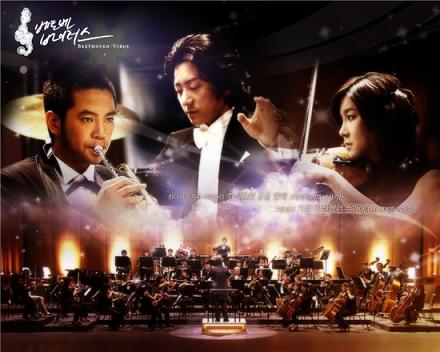
Beethoven à la Korea
Don't start rolling your eyes -- those of you who've been following this blog over the past couple of years -- but for those of you who do not know it already, I've been working on Beethoven's Pathétique sonata ever since returning to piano lessons. To give myself some idea of what I'm doing, I regularly play YouTube interpretations of the sonata by serious pianists, both renowned and amateur.
As with most YouTube videos, these interpretations are accompanied by viewer comments, both informative and ignorant. Among these comments, I kept running into the question: Isn't this song [sic] called Beethoven Virus? I assumed (correctly, as it turns out) that someone had done a popularization of the Beethoven work (the last movement), and that some folks were enjoying it without realizing that it was based on an actual classical sonata. Today, my curiosity finally caused me to do a little research. Even after perusing the internet, however, I'm still a little confused -- maybe some of you more attuned to contemporary music can leave a comment for the edification of both me and other readers.
"Beethoven Virus" is apparently the name of a 2008 Korean television series, telling the story of a highly talented but tyrannically demanding orchestra conductor and his complicated relationships -- both musical and romantic -- with several members of his orchestra. The series has been critically acclaimed, and was praised as unique in its portrayal of the lives of Korean classical musicians.
I'm not quite certain how the music called Beethoven Virus relates to this show. I've found articles discussing the TV series, and articles discussing the composition, but none discussing the relationshiop between the two. There is a two-CD album of music that was performed on the TV series, but the cuts all appear to be traditional classical compositions. The Beethoven numbers listed are all symphonies, requiring full orchestra, with the exception of one violin sonata. There are no piano sonatas
My best guess is that Beethoven Virus is the introductory theme music to the program, but this is strictly a guess. The best known interpretation of the music appears to be by a Korean group called BanYa, a group known for performing various forms of contemporary music, including classical cross-overs. BanYa's version is an interesting simplification of the piano sonata, performed by what sounds like a small orchestra, and it features a recurring trumpet obbligato and a heavy drum beat. (Other versions highlight different instruments, for example, violin.) Here is the YouTube video. Those of you more familiar with rock than I am may be able to classify this particular sound by genre.
It's pretty catchy.
Ironically, some amateur pianists have doubled back, and recorded YouTube piano arrangements of Beethoven Virus. These arrangements come out sounding like well-played but simplified (and syncopated) versions of the original sonata. As one commentor puts it, why not just learn Beethoven's original Pathétique?
One of my relatives warned me recently that "writing about music is like dancing about architecture." I have to agree. But hey, look at me! I just tried doing it, anyway!
-------------------And for something a little different, here is Beethoven Virus played as a recorder duet by a couple of kids in Mexico.
-----------------------(11-9-10) If anyone's interested, further research has given more insight into the origin of Beethoven Virus. The song was apparently arranged by BanYa, which is described by Wikipedia as an in-house (and mainly anonymous) collective working for a Korean company called Nexcade, which produces arcade games. The song was prepared for use in a series of music video games called "Pump it Up " (PIU). Beethoven Virus appears to have been developed specifically for the game "PIU: Perfect Collection." This game definitely pre-dated 2008, and so the Korean television series must have derived its name from the song.
I'm still interested in learning how the song was used in the series, if it was at all, and any other information any fans of computer/arcade games and/or contemporary music and/or Korean television may have to offer.
Posted by
Rainier96
at
4:31 PM
0
comments
Saturday, November 6, 2010
Another death
On my 15th birthday, my aunt and uncle gave me a subscription to U.S. News & World Report. I know they thought it was an odd gift for a ninth grader, but it was a gift that I had specifically asked for. I was delighted. It was my very first subscription to an adult publication.
At the time, the magazine was very bland in appearance and loaded with facts and data. Not just no color pictures, but no pictures at all. If you wanted to know the forecasts of steel and coal production for the coming month, the value of pork belly futures and the ups and downs of the Dow Jones, U.S. News gave you that information. Its editorial stance was what was then considered strongly right wing -- pro-business, low taxes, strong military readiness and an assertive, anti-Communist foreign policy -- and, needless to say, no nonsense here at home. That was ok by me, an avid Republican in my high school years.
Although U.S. News was strongly conservative, its domestic conservatism was a stance supported by hard economic data and expressed as explicit support for Big Business (not as opposed to Main Street business, but with no particular interest in Main Street, either). Its editors would have found much of today's Republican oratory to be alarmingly bombastic and unacceptably populist. Laissez faire economics was the cornerstone of its domestic economic policy, as it is that of The Economist today. Unlike The Economist, however, U.S. News had no interest in discussing history, political theory, theoretical science, opera, literature, or music. Its articles certainly were not introduced by whimsical, ironic headlines.
It was not much interested in "nuance." Or humor.
U.S. News was a magazine a little less exclusively focused on business than, say, Business Week, but it was aimed at the same audience -- heavy-set businessmen with red faces and thick necks, men who smoked cigars, drank three martini lunches, and hadn't owned a pair of jeans since high school. Men who wouldn't be seen dead at the theater, unless dragged there by "the little woman."
At some point in my life, U.S. News gave way in my affections to Time and Newsweek, and then to other, more sophisticated publications. And the magazine itself changed radically, attempting in recent years to gain subscribers by becoming more similar to Time and Newsweek. But I've always had a special place in my heart for the publication that gave me my first insights into the adult world of politics, economics, and business.
U.S. News & World Report ceases publication next month. Requiescat in Pace, I say, although its earlier editors would have responded to that expression of good wishes with a growled "Huh?"
Posted by
Rainier96
at
9:45 AM
0
comments
Friday, November 5, 2010
Steady on the rudder
Just a brief comment on the week's political news. Political writers are now filling the news pages with their analyses of "What Went Wrong?" Has the country become a nation of "tea partiers"? Is Obama's presidency a disaster to the Democratic party? Can Obama win re-election? Will Obama even be renominated? Will the party turn now to Hillary? (She says, by the way "not interested.")
Look: There were plenty of commentators who, before the 2008 election, wondered whether a win in 2008 wouldn't be a Pyrrhic victory for whichever party won. The economy was in free fall, and no one expected a significant recovery before 2010, maybe even 2012. The party in power would be blamed in 2010. Furthermore, Obama campaigned on a specific platform in 2008, which included health care reform as a major plank. He indicated from the outset that he was more concerned with accomplishing the goals for which he'd campaigned than he was in winning re-election in 2012.
He's done as much to accomplish those goals as the most partisan Congress in modern history has permtted. No, he hasn't returned the country to pre-2008 prosperity. But he has prevented the country from falling into a depression. (And, by the way, if you think our citizens today face anything like the hardships of the 1930's, you'd better go back and read your history.) He has prevented the collapse and/or nationalization of the banks, and has saved the auto industry from collapse.
I predict that historians, with the advantage of hindsight, will judge his first two years as one of the most successful of any president in modern times.
So let's all just calm down and see what happens next. If the Republicans adopt a newly conciliatory approach to government, the country will be in much better shape in two years. In that case, Obama will be re-elected, and we probably will have a Congress fairly evenly balanced between the parties, along natural philosophical lines. If, as now appears more probable, the Republicans are guided instead by "tea party" philosophy and by a predominant desire to hurt Obama politically, the country probably still will recover. All economic indicators are on the upswing; employment, although a trailing indicator, is already showing weak signs of improvement. The voters will be less upset by the economy, and will increasingly view the Republican party as a group of idealogues, uninterested in pragmatic approaches to public policy, opposed to the welfare of the average citizen, and motivated solely by political objectives.
Obama has done what the voters in 2008 asked him to do. But having a job is always an adult's primary concern, and voters may feel -- with some justification -- that other goals should have been subordinated to a governmental attack on unemployment. When they discover that the Republican economic approach is not to fight harder against unemployment, but to return to "trickle down economics" -- let's give the rich lots of money, and, with luck, some day the rest of you will get a little extra in your paycheck -- I don't think they'll be impressed.
In politics, as in life itself, things are never as good or as bad as they seem at the time. Let's wait this one out and keep our composure.
Posted by
Rainier96
at
10:34 AM
0
comments
Wednesday, November 3, 2010
A growing family
Congratulations to Tawny and Leslie on the arrival of their brand new daughter -- and my new great niece -- Hayden Grey, born last Friday, October 28, 2010. Mother and daughter are doing great, from all reports, and the baby -- according to her highly reliable grandparents -- is "absolutely beautiful and perfect."
During a week filled with political angst and ugly arguments, a week when I've at times questioned the basic intelligence of my fellow citizens, it's a welcome relief to greet the arrival on earth of a cute young being who is "absolutely beautiful and perfect."
Much love to this new addition to our family, and to her parents. It's going to be fascinating and exciting to watch Hayden Grey grow up, year by year, developing her own unique personality and talents and interests. Best wishes to her as she sets out on what's certain to be a wonderful life.
Posted by
Rainier96
at
6:13 PM
0
comments
Tuesday, November 2, 2010
Muir's valley
Back in 1851, the militiamen of the "Mariposa Battalion" became the first European-Americans to enter Yosemite Valley. They arrived with the intention of moving the local Indians out of the valley and onto a reservation (or, in the alternative, killing them), so that American immigrants could pursue the joys of Gold Rush prospecting downstream, without risking Indian attacks.
Later generations were less interested in genocide, and more interested in the geologic oddities and scenic beauty of the Yosemite Valley and its surrounding areas. Notables such as Frederick Law Olmstead, Josiah D. Whitney and John Muir successfully urged protection for the region. Yosemite became the world's first state park in the 1880's, and then, in 1890, was created a National Park by act of Congress. Muir went on to help found the Sierra Club, for the purpose of protecting Yosemite and other areas in the Sierras from hostile local developers, and became the club's first president.
It was with this rather impressive history behind us that Doug, Denny, Chris, Clinton and I packed ourselves and our gear into a couple of cars and headed down to Yosemite for three nights of camping. As most of us know, Yosemite Valley has had its ups and downs over the past century. The invention of the automobile, with improved roads and resulting mass tourism, transformed the valley from Muir's isolated paradise into a small urban community, equipped with stores, service stations, lodges and cabins, and a luxury hotel (the Ahwahnee). The valley was overrun by casual tourists, not all of whom shared John Muir's ideals. The nadir was perhaps reached in 1970, when mounted park rangers broke up a mass encampment of young people, precipitating a riot with 175 arrests and 30 hospitalizations.
Conditions have improved somewhat since that time, with careful land management and required reservations for valley camping. Outside the sliver of Yosemite valley, and apart from the east-west highway over Tioga pass, the park is managed largely as legal wilderness, with access by trail only.
Even so, Yosemite Valley remains overly popular, and probably overly developed. However, on Halloween weekend, and with the Giants playing in the World Series, we discovered that most of the crowds had other things to do elsewhere, and we had the park largely to ourselves. The weather was great, aside from rain on Friday night that merely added to our sense of coziness inside our tents. The hiking trails were in excellent condition, with few fellow hikers to compete against. On Halloween night (Sunday), sightings of occasional costumed ghosts and zombies were made along the valley floor roads, and we shuddered at the cry of banshees from the far reaches of the campground. But better a visitation from a banshee than from a hungry bear, we figured, of which we encountered none in the camping area.
We undertook two reasonably strenous hikes: to the top of Nevada Falls and on to Little Yosemite Valley, and to the top of Upper Yosemite Falls and on to Yosemite Point. Both climbs were sufficiently challenging to keep our heart and breathing rates elevated, and to burn off the rather hearty breakfasts that Denny and Chris whipped up for us each morning. In the evenings, we repaired to the bar at the Yosemite Lodge and watched the World Series on large screen TVs. Unlike the trails, the bar was packed. It was also partisan -- the Giants were cheered lustily, and the Bush family was booed with vigor whenever their grumpy countenances were caught on camera.
It was a great time of year to make the trip, and a good bonding experience for our little group. Now that we're home again, I don't understand why we haven't done things like this more often. I suspect we will in the future.
Posted by
Rainier96
at
6:36 PM
0
comments
Tuesday, October 26, 2010
Rain
Yeah, well, so we hardly had any summer this past summer. Oh, we had a warm day here and there, sometimes even a few warm days in a row, but what we mostly had was not summer. What we mostly had was clouds and un-summery cold temperatures.
So, sure, it does seem unfair to suddenly discover that summer is over, even Indian summer, and to realize that there'll be no going outside again without a jacket for at least another six months. Even though the "summer" that is over this year was a mythical construct, a merely formal place on the calendar, not anything that non-Northwesterners -- those real kinds of people we used to read about in our Dick and Jane books -- happy families with glowing cheeks who visited farms with bright red barns and silos and celebrated hot, non-rainy Fourth of July's and shouted with joy on snowy sleigh rides to Grandma's house for Thanksgiving -- those kinds of folks -- would recognize as summer.
But, surprisingly, this post isn't a lament for our summer that never was. Au contraire, as the French would say, when not out on strike.
I walked through my neighborhood today, onto and around the University campus, down into U Village (an unenclosed shopping center so upscale that there's nothing there that you really need to buy -- but where you feel better about life for just having walked through it), and then back home. It was overcast. In fact, the "cast" wasn't "over" us at all; we were right in the middle of it. We were sort of "intracast," I guess. Which is to say that it was cloudy, and that at times I was walking through bits of the clouds as they touched down to earth. It was drizzling, which is something it does a lot of here in the Northwest Corner. It was drizzling, then it was lightly raining, then drizzling again -- and then sometimes just foggy, foggy at that point where you know it really wants to and intends to start drizzling all over again but hasn't yet quite summoned up the gumption to begin.
The trees -- and my neighborhood and the campus and all the surrounding area are forests of trees --were at the stage where most were still green, but where many species were turning to yellow, or had already turned yellow; and where a few of the more surprising species had avoided yellow altogether and were a mass of flaming scarlet. But the greens and the yellows and the almost yellows and the scarlets were all muted by the overcast and the fog -- their colors still eye-catching, but toned down, as though the painter had stirred a little black into their pigments.
And it was quiet, hushed, even in the middle of campus, with that muffled quiet that comes along with the overcast's dipping down and dripping down and becoming fog. Fallen leaves were soggy underfoot, and the air smelled of fog and fir and drizzle and rotting leaves. It all brought back happy, secure memories of walking to school through similar leaves and wetness and dripping trees when I was a kid.
So I walked, feeling sad and nostalgic and subdued, as well as damp, but experiencing all these feelings in a strangely contented and satisfying way. I was quietly at one with my surroundings, feeling happiness of a sort that Dick and Jane -- living in their Manichean world of sharply differentiated seasons, a world where it's pretty much either hot and dry, or cold and snowy, depending on the time of year, a world so much in contrast to my cool, drizzly world, my soggy world of ambiguities, my woodsy world where rotting dead plants give life to wondrous mushrooms and toadstools and other fungal forest growths, some beautiful and some grotesque, some delicious and some deadly, and some all of the above -- probably never experienced.
Don't get me wrong. I can get mighty sick of rain -- even soft drizzle along multi-hued forest paths -- after I slog through it nonstop for months on end. But today, the rains were just beginning. I was still at the stage when the drizzle takes me back to childhood, when every season, when life itself, was fresh and ever interesting and new. The season's rains had just begun, and I was feeling that I was living in the best of all worlds.
And I suspect I really do.
Posted by
Rainier96
at
8:41 PM
1 comments
Sunday, October 24, 2010
Give it back to the kids
The head coach of the Texas Longhorns was on the tube last night, a few hours after his team's humiliating loss to Iowa State. His men showed a disgraceful lack of intensity on the field, he admitted angrily, shaking his head. He'd noticed their slackness all week during practice. He did everything he could to put some backbone into them, but it obviously had not been enough.
The game had been all about him, in other words, and the damn kids hadn't allowed him to win.
This coach's performance -- suggestive of an NFL coach's post-game show -- illustrates, to me, at least, what's wrong with college football. Long ago, football stopped being a sport for students and became semi-professional entertainment only loosely associated with the academic goals of sponsoring colleges. I've written at least one diatribe giving my opinion about college athletics, and won't repeat it here.
I hate the ritual at the end of the game where the winning and losing coaches hug and congratulate/commiserate with each other before the TV cameras. In the South, especially, each coach ventures onto the field surrounded by his own complement of uniformed state police; they look like two Central American generalissimos attending a conference. Are they anticipating assassination attempts?
In my ideal world, the student captains of each team would meet at midfield and exchange appropriate post-game respects. The student captain -- if anyone -- would appear on TV to be interviewed about the team's performance. The teams would be turned back to the students. The coach would certainly be honored for his coaching abilities, but in the same way that a fine professor is honored.
When a student wins academic honors, the focus is on the student. His professor or professors don't receive six or seven figure bonuses as the result of the kid's success, and they aren't fired if he fails.
We can't go back and start from scratch. We're stuck with the semi-professional teams that history has bequeathed us. Schools have learned to depend on the wealth that media exposure provides. Most schools, short of funding, can't afford the course taken by the Ivy League -- abolition of athletic scholarships and withdrawal to less competitive Division I-AA play.
Today, television is king. Historic conferences are being torn apart and reassembled for no reason other than maximization of profits -- profits for TV and thence for the schools. The absurd BCS process has been foisted upon us, because of the media's obsession with identifying a national champion. Now, already, the media have turned on the BCS, and are demanding a national playoff system. We have been conditioned to accept this media-created "need" as real and legitimate. The championship of a conference -- once a team's highest goal -- now appears a paltry prize, desirable only as a stepping stone to a national championship, whether mythical or somehow legitimized by postseason play.
But if we can't reverse this transformation, we could at least step back and ask where we're going. We could remember that college athletics are primarily for the benefit of students, not for entertainment of the public. We could make future decisions regarding the future of college football based on that understanding.
But who am I kidding?
Posted by
Rainier96
at
10:55 AM
0
comments
Tuesday, October 19, 2010
Voting without hope
I'm resigned.
I mailed in my ballot over the weekend. I voted to re-elect our Democratic senator. I then picked my way through an unusually long list of state and local initiatives and referendums.
In general: I voted for schools. I voted against two propositions to abolish the state's liquor monopoly. (It seems well run and I'm familiar with California, where liquor is sold like milk and toothpaste; I see no advantage to that system.) I voted against measures establishing minority-rule when it comes to new taxes. (Again, I'm not interested in watching my state follow California -- into chaos and insolvency.)
I voted against repeal -- heavily financed by out-of-state interests -- of sales taxes on candy, bottled water and soda pop. Similarly, I voted against repeal -- supported by out-of-state insurance companies -- of our state's worker's comp system.
With some hesitation, I voted in favor of imposing a state income tax on folks making over $200,000. People living in large lavish houses in the nicest parts of town who prominently brandish "Vote No on 1098" signs in their well-manicured front yards did their cause no favor -- at least, not in winning my vote.
The initiative and referendum were progressive innovations of the early 20th century. They were intended to permit average citizens to overrule the decisions of corrupt legislatures, which were then dominated by big corporations. At one time, I had a bias in favor of supporting -- or at least seriously considering -- any citizen initiative. But the entire process is now dominated by the same big business interests which it was designed to control. Collecting signatures on petitions has become a profitable cottage industry. One idiot -- Washington residents know who I mean -- has devoted his entire life and career to proposing and obtaining passage of initiatives that have the design and effect of crippling the state's ability to function.
As a result, ballot propositions -- aside from support of schools -- now come before me with a presumption of undesirability. The burden's on you -- fresh-faced kid on the corner soliciting signatures -- to persuade me that your sponsor's motives are pure and that the possible outcome, if the measure should pass, will be worth the risk of the experiment.
Conceivably, my attitude is merely a manifestation of an increasingly rigid and conservative personality, hiding under the guise of support for liberal politics. I hope not, and I doubt it.
This will not be a good year for liberals, under even the most favorable projections, at either the federal or state levels. I'm just hunkering down, doing what I can, and hoping the country -- and the millions of citizens who are suffering through this recession -- can survive the next two years. If the Republicans win and show an unexpected brilliance of leadership, compassion, and expertise -- well, good for them. I might even consider rewarding them to some extent, come 2012. I'm not worried, however, that anyone's going to call me on this promise.
As I say, I'm not happy. I'm not hopeful. I'm resigned.
Posted by
Rainier96
at
2:05 PM
0
comments
Friday, October 15, 2010
Birthday girl
Happy Birthday Maury. Your sweet disposition and cute face have given us all so much happiness and enjoyment this past year. It seems like just yesterday that you popped into our world, looking all puzzled and bewildered. Now, so soon, you are One Year Old, and already walking. Well, a few steps at a time. And talking. Well, at least your mom and dad claim the odd syllables that you repeat with a grin on your face to be actually euphemisms for ma-ma and da-da!
We can't even begin to imagine what you'll be up to a year from now, when you turn two. Have a very happy year, keep smiling, keep learning, keep growing. (And remember, you have just 16 more years to submit your Stanford application!)
Posted by
Rainier96
at
3:06 PM
1 comments
Wednesday, October 13, 2010
City of God, City of Man
A new strain of flu, a world-wide pandemic, a death rate apparently exceeding that of 1918-19: No one should have been surprised, but no one was prepared. Moreover, this influenza virus frequently attacked the brain, leaving survivors with varying degrees of brain damage and memory loss.
The government was crippled -- the American president herself suffering from memory loss -- but continued to function. Goods and services were in short supply. As in earlier troubled times, people turned inward, seeking fulfillment within themselves rather than in consumerism. Christian fundamentalism thrived. Many concluded that the last days were upon us. Believers awaited the "rapture," the Second Coming, the Last Judgment.
This is the setting for Sigrid Nunez's sixth novel, Salvation City, the coming of age story of an intelligent youth named Cole, during the months before and after his fourteenth birthday. Cole -- the son of nonreligious Chicago professionals ("he'd been raised to believe religion was for retards") -- regains consciousness in an orphanage, after being severely ill, and learns that his parents have died. Eventually, he meets Pastor Wyatt and his wife who take him to their home in "Salvation City," a small, evangelical community in Indiana. His world is turned upside down. His parents had always lived in nervous fear of death; in his new community, on the other hand, everyone was eager to join Christ -- any moment now -- in His heavenly kingdom.
The story is told from Cole's point of view, with flashbacks to his earlier life as he gradually regains those memories.
All the ingredients seem available for a formulaic science fiction adventure. But Nunez understands that for any 13-year-old, in any society, the world he faces is always baffling, scary, turbulent -- but also exhilarating. To an intelligent boy growing up, say, during the decline and fall of Rome, great historical trends like barbarian incursions at the frontiers of empire, debasement of the currency, and the decay of domestic government would not have been among his primary concerns. Like boys of every age, his daily thoughts would have centered on his first love, his need to establish an identity apart from his parents, his search for vocation, his desire to find meaning in the universe.
Nunez's story is primarily about a boy's discovery of himself. The pandemic is the backdrop.
Even before the pandemic struck, Cole had been separating himself emotionally from his parents, especially after he discovered that his mom was making plans to leave his father. Silent and withdrawn, in the throes of adolescence, Cole was intelligent and observant and a gifted artist (drawings and graphic stories), but a bored student, an academic underachiever.
Cole's hostile response to the adult world represented by his parents is challenged by the warm Christian environment he encounters in Indiana. Nunez neither ridicules nor idealizes this less sophisticated world. Pastor Wyatt is conservative theologically, but loving toward everyone. He displays a full understanding of -- and sympathy for -- human weaknesses. He does not share the excitement of many in his flock that the"rapture" is imminent, and he reminds them repeatedly that their task is to live Christian lives, whether the world ends tomorrow or far into the indefinite future. His love and that of his wife for Cole, who becomes the son they were unable to have themselves, is touching and convincing beyond doubt.
Cole learns much about himself, about other people, and about the search for God while living in Salvation City. He falls in love with an older girl, and learns about heartbreak. He learns that even the best of adults have their own weaknesses, just as he does himself. He gains confidence in his artistic abilities. He learns to shoot a gun, despite his dislike of hunting or even fishing, realizing that, in the more dangerous post-pandemic world, an adult who does not know how to defend himself is at the mercy of others. He learns compassion for his parents, some degree of understanding for their problems, and regret they died still stinging from his rejection.
But he suspects that, even after all the Bible study that he has done together with the Pastor, he doesn't really possess the same strong faith as do the Pastor and the others in Salvation City. Too often in his prayers, he feels he is speaking only to the air or to himself.
Also, he realizes that his education before the pandemic was mediocre, and that his home schooling by the Pastor's poorly educated wife has been a disaster. Watching TV, he learns of a highly selective school in Washington, D.C., attended by bright students who -- unlike himself when attending public schools -- are neither bored by their studies nor bullied by their fellow students. He is overwhelmed by envy.
A huge misunderstanding had been allowed to take place. Why hadn't anyone seen that just because he hated school didn't mean he was lazy and dumb? It was unfair; it was a mistake. Somehow it must be corrected. If not, he would grow up to be something worse than an underachiever. He would grow up stupid, an ignoramus.
If he spent his life in the comforting world of Salvation City, he realizes, he would always be considered an uneducated bumpkin. Maybe bright kids, like those on the TV show, wouldn't bully him, but he knew that, as he was now, they'd never want him for a friend. "They would ignore him. Maybe even feel sorry for him. The one thing worse than bullying."
Always quiet, always withdrawn, Cole slowly decides that the folks in Salvation City are wrong about at least one thing: the world is not about to end. He doesn't reject the religious training the Pastor has provided -- he is more than willing to reserve judgment about questions of faith -- but he strongly feels the need to learn and to experience much more than he can ever learn or experience in Salvation City. He has a long life ahead; he's excited about living it. He begins making plans to leave.
He knew the things he wanted now he wanted badly enough that nothing would stop him. It was only for a little while longer that his place was here. He knew that he would stay, and then, when the time came, he would go away. He did not know if he would return.
He is speaking about residence in Salvation City. He also is speaking metaphorically about his life on earth.
And he is finding himself. Cole is growing up.
Posted by
Rainier96
at
12:51 PM
0
comments